


All Things Powder and Provisions: When Norwich Came to the Aid of Washington

Updated: Jan 30

It is early January 2026 and I am preparing a new long-form journal article, as well as a companion presentation, regarding 1776 and Norwich, Connecticut.
I can prove the tremendous roles ordinary Norwich people played in the logistics of provisioning, transporting, and arming the Continental Army (CA) in 1776 (and 1775 too). This deep-dive article is destined for Connecticut History Review's Fall 2026 volume.

Washington Depended on Connecticut a lot in 1776
George Washington did not play a part in the Battle of Bunker Hill--he just missed it, arriving in Cambridge in early July 1775. It would take a long time before the Continental Army (CA) could build back up their gunpowder reserves. In fact, Washington could not engage the British until he had more powder.

Lack of quality gunpowder was a persistent worry for Washington especially throughout 1776. The colonies did not produce it in large quantities. The only options were priviteering British vessels and runs down to the French West Indies to get it. Patriot priviteering was very successful. Not until 1778, did the French officially come in-- they produced the best gunpowder. For more on Rev War gunpowder history visit: https://revolutionarywarjournal.com/gunpowder/.
Washington wanted constant updates on powder: where it was gotten, how it was stored, who was storing it. So precious it was. When the army got more, a lot of it was stored in Norwich in the first part of the war. Norwich was relatively safe, yet close to the Long Island Sound.

As of October 1776, CA army purchasing agent, Andrew Huntington was responsible for ALL of the remaining barrels of CA powder (from Massachusetts) and was desperate to get information on building a shelter for the guards, who were not getting paid yet asked to stand around in freezing temps!
Andrew wanted his younger brother, Joshua, a captain in the army, to personally ask Washington because he wasn't getting any answers and the guards were about to quit. Things were one big chaotic retreat in October and Washington was not able to do his administrative stuff. I think they were in the White Plains area by the end of the month.
There was ALWAYS a threat of nefarious Loyalist actors infiltrating Connecticut towns, like Norwich, to perform arson, steal supplies, or kidnap important patriots. The guards were needed! Rotations of night watchmen were also required to protect the town probably throughout most of the war. These kinds of actions were required in Norwich.

Not only powder, however, but the whole supply chain was always topmost on Washington's mind based on reading his letters to people like Jonathan and Joseph Trumbull who relied, in turn, on their Huntington kin. Shoes, blankets, clothes, boots, guns, flour, rum, beef, and pork were typically in short supply. In fact, during the Battle of Bunker's Hill, many blankets were left in Charlestown by retreating patriots.


I did not hear a lot about the army supply chain in Ken Burns' battle-focused series. I am ready to tell you that, unsurprisingly, it was a constant stressor for everyone involved.
The feeding and supplying of the army challenges can be observed in letters at all levels--from commissaries like the Trumbulls and Huntington brothers to the army quartermasters like Mifflin and Moylan--especially in the aftermath of the Battle of Brooklyn, and finally the everyday soldiers like Joseph Plumb Martin, who bluntly described their starvation. If you don't have food, clothing, blankets and shoes, for example, then soldiers will desert or plunder, which Washington was desperate to avoid.
Army historian, Dr. Erna Risch wrote an excellent piece of scholarship about the supply chain and the Revolutionary War. Researched, and written in the 1970s and 80s (without the Internet), she pulled it all together. A common problem was the Continental Congress. No surprise there.

Battles were avoided, or delayed, much to Washington's consternation because of a lack of sufficient quantities of gunpowder. However, that was probably a good thing in January 1776, when he wanted to attack the British in Boston and his officers told him not to. He listened to them.
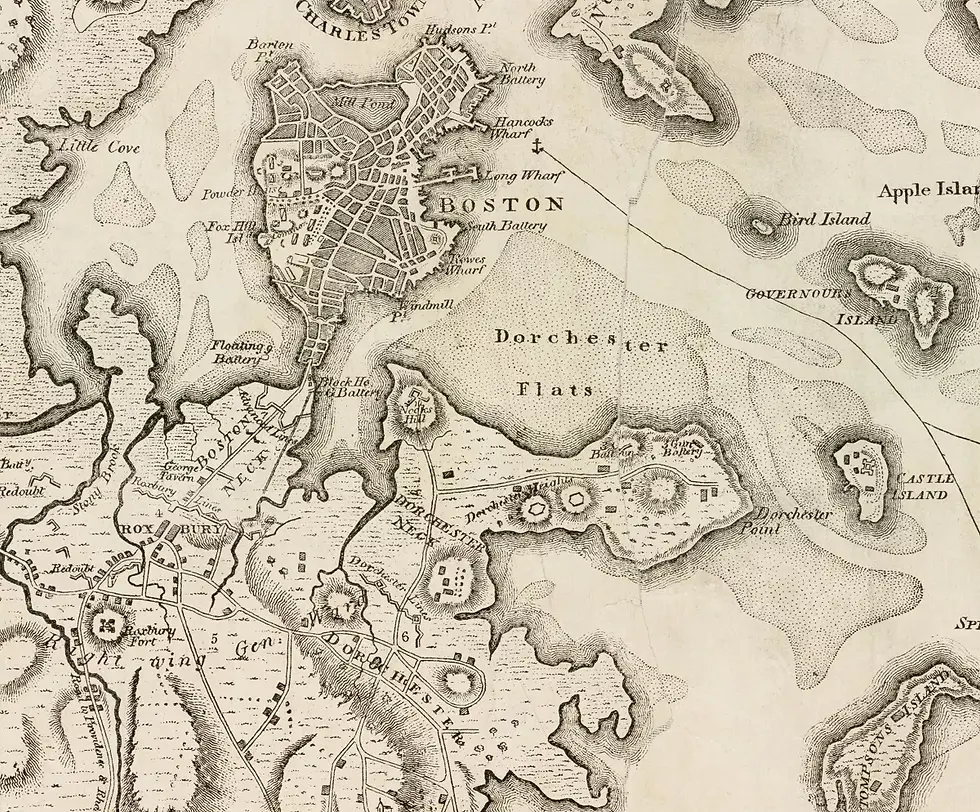
By February 1776, Washington was happy to receive from Connecticut's Jabez Huntington two tons of “a seasonable supply” of powder. This delivery enabled the army’s successful takeover of Dorchester a few weeks later sending a powerful message to the British forces. The Redcoats would go away....for awhile.

Washington's Plans for New York Occupation Depend on Norwich, CT
Washington and his aides were already planning for the occupation of New York City BEFORE the British left Boston. In January, he had scouts down in Manhattan looking for the best hills to fortify to do the impossible: defend New York City from a British invasion.
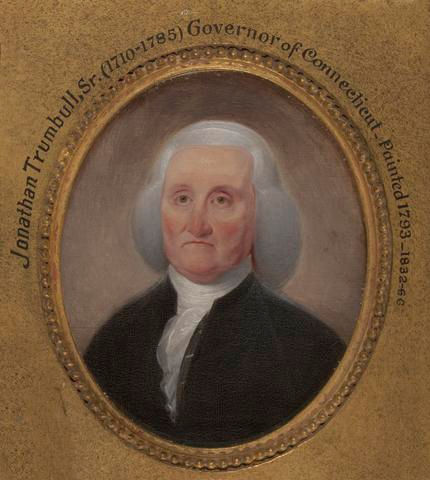
But how would all of the troops, camp equipment, ordnance, and provisions be moved? The Trumbull/Huntington kin group consisting of: Governor Jonathan Trumbull, Colonel Jabez Huntington, Colonel Joseph Trumbull, Lieutenant Joshua Huntington, and Mr. Andrew Huntington would work their tails off to help the nascent Continental Army at every step of the way during topsy-turvy 1776 functioning as commissaries--in charge of getting the supplies to the quartermasters. Christopher Leffingwell, a merchant and entrepreneur from Norwich was also a provisioner and performed a variety of other tasks for the war effort. Most New England merchants were pouring all of their resources into the fight. It was inglorious work with no benefits.

The American Antiquarian Society in Worcester has the Joshua Huntington Papers and they are full of Revolutionary War bills of lading by the this kin group and their maritime associates: ship captains on down to wharf workers, and more. The Connecticut Museum of Culture and History also has the Andrew Huntington, and Joseph Trumbull papers. Many of them are being digitized as I write this.
The Huntington/Trumbull Kin Group Worked Hard During the War Era


Norwich's Chelsea Landing "The Landing"
As far as troop transportation goes, once the soldiers, and wagons, got to the Norwich Landing (from the Plainfield Road), most of the troops were put onto available Huntington vessels, and others, and taken down the Thames River to New London and then from there onto other vessels (or the same one) bound for Manhattan via the Long Island Sound. They did NOT march the whole way....Washington tried to avoid that when he could to save the strength of his troops...and their footwear. He was always thinking of his men and wished he could do more.

The Norwich Landing area was a hive of activity throughout the war years. Norwich-based ship captains, like Allen Ingraham, transported MOST of the equipment that came from the Massachusetts' camps at Roxbury and Cambridge. Privateered goods were frequently sent to Norwich, as well, to be auctioned off by the Court of Admirality and/or used for the army.
Army supplies and provisions, large and small, loaded in barrels and chests, arrived at the Landing, by carters from all directions. They were then inventoried and loaded onto waiting Huntington vessels, inventoried again by the ship captain (who was responsible for the goods), at the Landing, and then zipped down to New London. Next, if the weather was good, it was down the Long Island Sound with a final destination of the East River. This shuttle of goods and men and supplies occurred weekly, if not daily, throughout 1776 and beyond.

Over-Emphasis on the "Founding Fathers"
Many nineteenth-century Connecticut historians mentioned the tremendous roles Norwich and Connecticut people played in the war effort. However, as we continue to be deluged with too much about outsized military, and political, personalities and every single minute of battles, we still don't know much about all of the other people who sacrificed their lives, wealth, and health to the revolution AND war.
One of the distinctions I am seeing lately is a good one: the difference between the "American Revolution" and the "Revolutionary War"--revolutions and wars are two different things--we had a revolution that led to a war.
Key Sources:
Founders Online, National Archives, https://founders.archives.gov/documents/Washington/03-03-02-0257;
"The Joshua Huntington Papers," The American Antiquarian Society, Worcester, MA
"The Huntington Papers," Connecticut Museum of Culture and History (CMCH), Hartford, CT
"Joseph Trumbull Papers" (digitized), CMCH
Connecticut State Library


Comments